
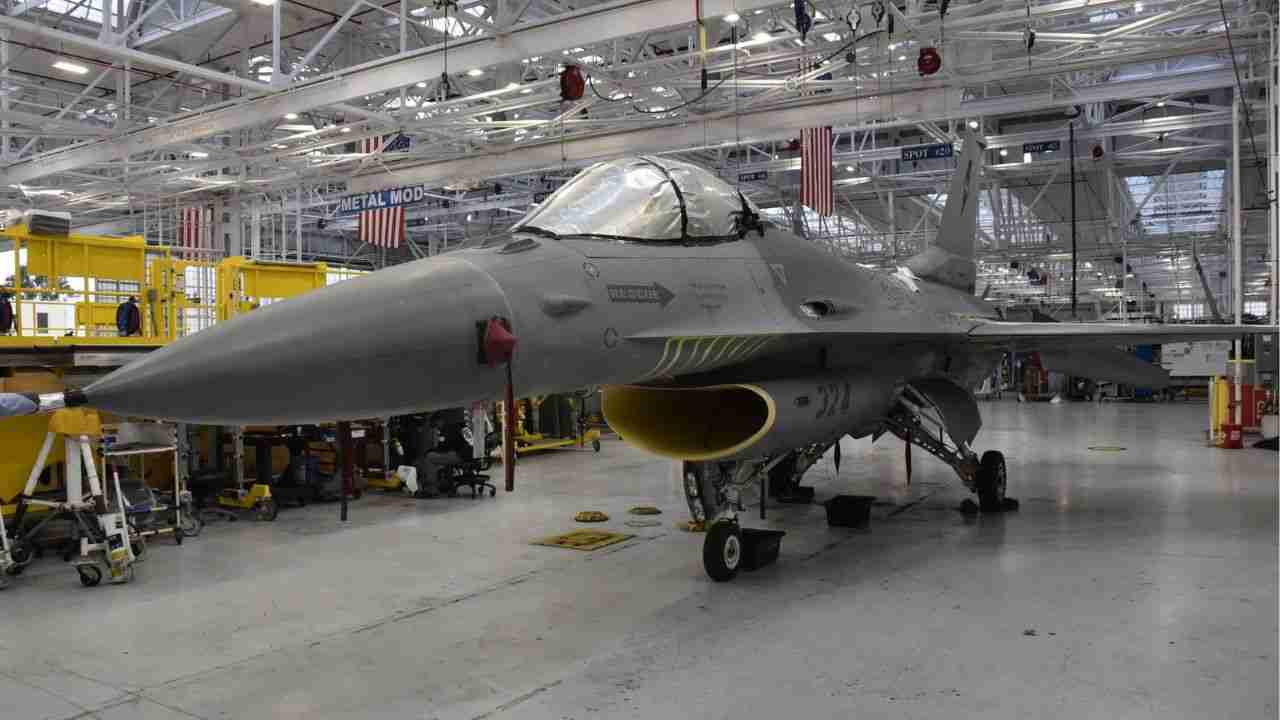
The United States Navy has completed, eight months ahead of schedule, the first Planned Structural Sustainment Repair (PSSR) on an F-16C Viper used in the aggressor aircraft role. The work was carried out by the Naval Air Systems Command (NAVAIR), in partnership with the Fleet Readiness Center Southwest (FRCSW) and the PMA-226 program office.
The initiative is part of a plan to keep the F-16s transferred from the Air Force operational through 2035, many of which had an estimated remaining service life of between one and five years when they were incorporated into the Navy.
To enable the program, the Navy stood up a new depot-level maintenance line in just 18 months — a timeline considered unusual, as similar processes can take up to five years. The effort involved acquiring equipment, adapting tools, adding thousands of parts to the naval logistics system, and providing technical training for a platform that had not previously been widely operated by the service in heavy maintenance roles.
The F-16s replaced part of the F-5 fleet in the Adversary mission and are used in advanced pilot training, including support for the TOPGUN course and carrier strike groups. Classified as 4+ generation aircraft, they offer a lower-cost solution for simulating modern threats during operational exercises, and are operated by the Navy’s air combat development center as well as by Air Force Reserve components.
Beyond structural recovery, the program includes upgrades to align the jets with USAF standards, with updates to avionics, radar, and mission systems. The budget also provides funding to extend airframe service life, increase flight-hour limits, and ensure the aggressor fleet remains relevant for decades to come — including future integration into training environments that combine live, virtual, and simulated assets.
Source: The Aviationist | Photo: NAVAIR | This content was created with the help of AI and reviewed by the editorial team
